DECTRIS D.LAB for Instruments
Research facilities, such as synchrotrons or universities can connect their laboratories and experimental stations to DECTRIS D.LAB and upload data from experiments. The connection of the data acquisition device to the cloud can be done in different ways for different licences and their performances.
Hardware vs. Software assisted data upload
The connection between a research facility and DECTRIS D.LAB can be established using either a hardware-assisted high-bandwidth solution or a software-based approach, depending on the specific needs of the experiment. While high-data-demand experiments benefit from dedicated hardware for seamless, real-time data transfer, lower-demand setups can rely on a secure, software-driven connection without additional infrastructure. The choice between hardware and software solutions ensures flexibility in integrating DECTRIS D.LAB into diverse experimental workflows.
DC-HUB hardware - high bandwidth and data buffer
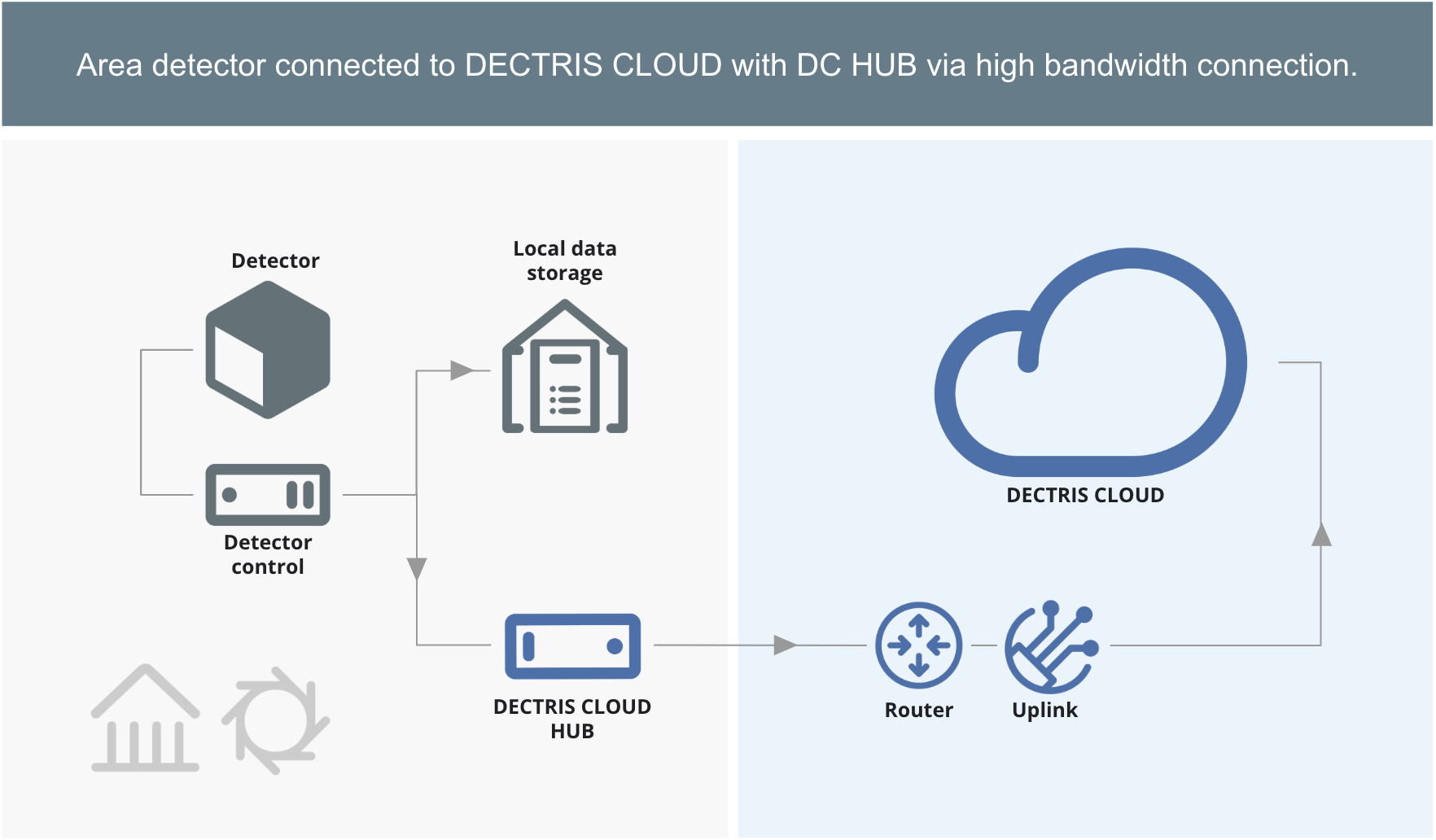
A high bandwidth connection to DECTRIS D.LAB is the go to option for sophisticated experiments that depend on a reliable system for seamless data transfer. The data acquisition control device in a laboratory or experimental station sends data to the DECTRIS D.LAB hub during data acquisition (live data transfer) without interfering in the local data paths. The hub encrypts and authenticates the data and streams it to the cloud via a high bandwidth connection provided by DECTRIS. The data takes less than 3 seconds to reach the processing nodes in the cloud, compatible with live feedback methods and on the fly analysis, ideal for experiments of data demands from moderate to high.
DC-SYNC software - no extra hardware
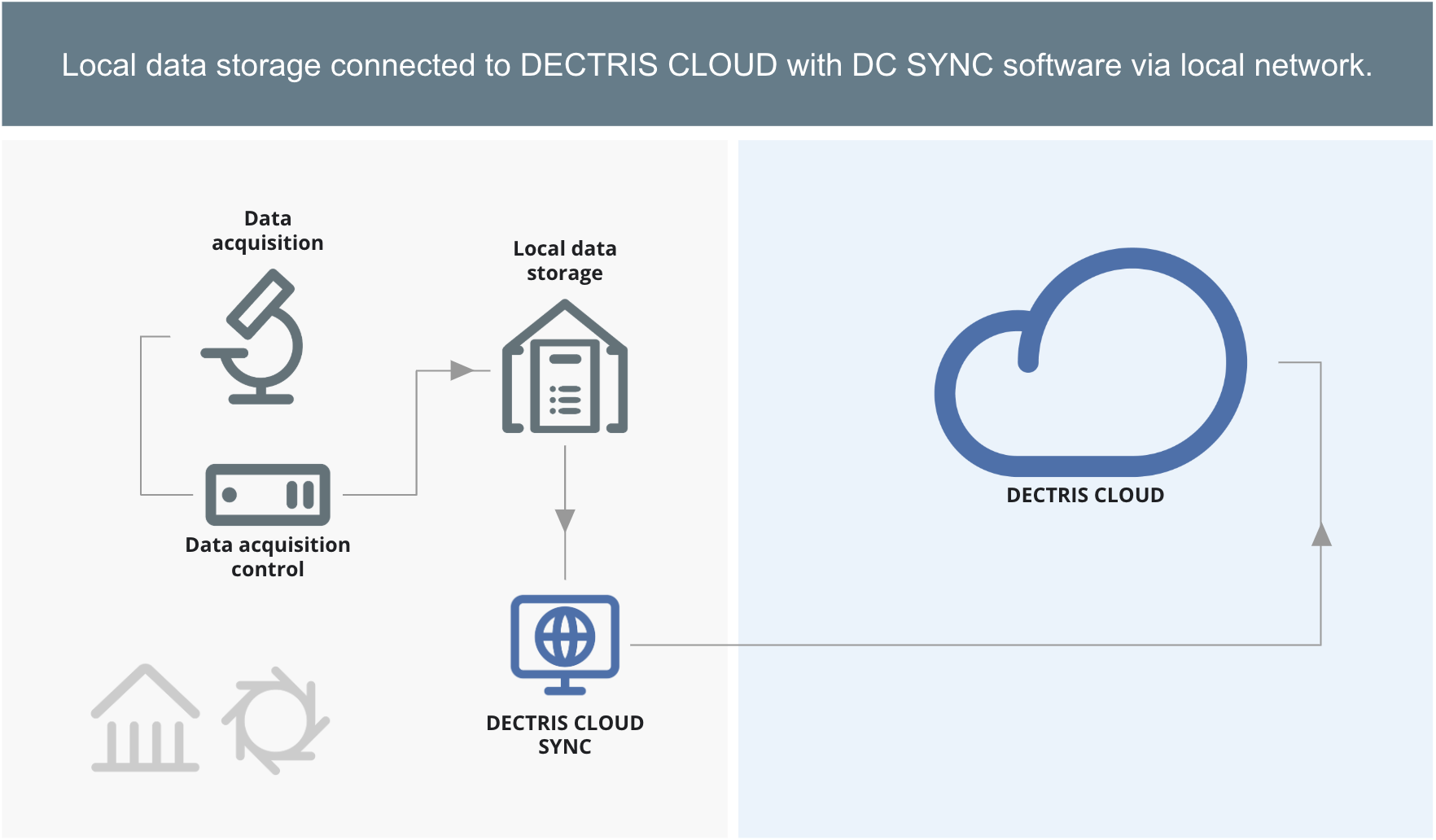
A local network connection to DECTRIS D.LAB via DC-SYNC provides a streamlined solution for less demanding experiments requiring secure, software-based data transfer without additional hardware. The data acquisition control device in the lab or experimental station sends data directly to DECTRIS D.LAB using DC-SYNC, which encrypts and authenticates the data before transferring it to the cloud over the local network. This setup supports reliable data transfer, ideal for workflows that benefit from DC-SYNCs simplicity and software-driven connectivity, making it well-suited for experiments with lowest data demands.